The Dark Heaven (2026): A Prophetic Book, a Seven-Year Curse, and a Second Half That Loses the Thread
The librarian in Mekkarai doesn’t die on screen. He dies in the ledger. Every seven years, in June, the hill village loses its men, and the film’s opening act hands us the one object that supposedly knows the schedule in advance: a book that names deaths before they happen. Balaaji, writing and directing in his feature debut, understands that the scariest thing in a Tamil crime thriller isn’t a masked figure, it’s a document. Paperwork as prophecy. It’s a genuinely sharp idea, and for roughly seventy minutes, The Dark Heaven rides it hard enough to justify the ticket.
Then the second half arrives, and the film starts answering its own questions in a mumble.
The Inspector, the Mist, and the Book Nobody Can Explain
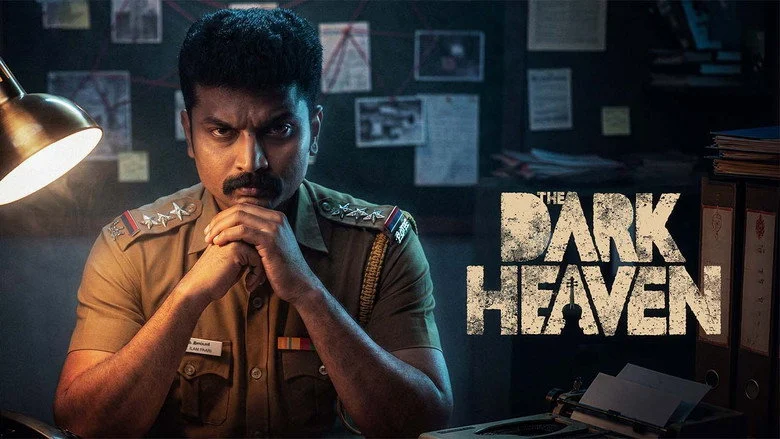
Sidhu Sid plays the newly posted inspector, and his best work is his quietest: the questioning sequences, where he sits across from villagers who have already decided the forest deity is guilty and simply waits them out. There’s a real craft choice in how Balaaji blocks these scenes, the inspector is almost always seated lower than the people he’s interrogating, camera at chest height, so the rational outsider looks like the supplicant in the room. It’s a smart visual argument about who actually holds power in a closed community, and Sidhu Sid’s stubborn, unsmiling curiosity sells it.
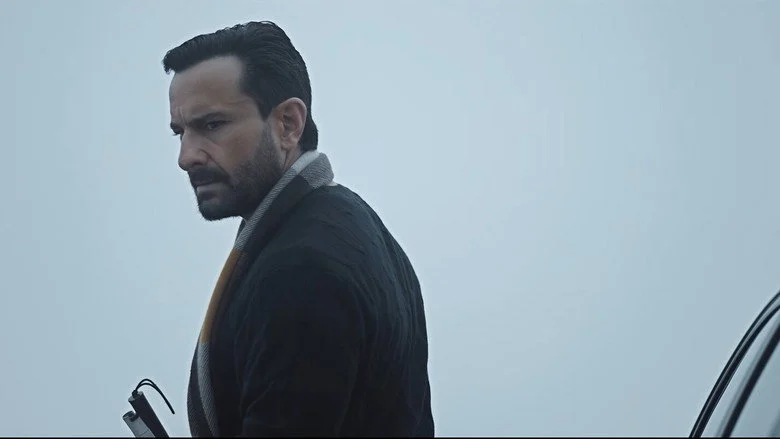
The film’s most effective single beat is the one the trailer already spoiled: the librarian receiving the book. No jump scare, no score sting, just a man opening a volume that has apparently been writing his neighbors’ obituaries for him. That restraint is the movie’s signature, and it’s why the mist-heavy Mekkarai photography (all grey-green hills and wet stone) does more narrative work than any of the kills.
Where the Threads Start Unspooling
Here’s the problem. A mystery built on a prophetic book needs an airtight chain of cause and effect, because the audience is doing arithmetic in their heads the entire time. Once the inspector’s arrival coincides with a fresh wave of deaths and the librarian’s daughter (Rithvika) turns up carrying her own connection to the cycle, the screenplay has three engines running, curse, killer, inheritance, and it only services two of them cleanly. The psycho-killer thread, teased with a masked figure and a violin in the marketing, gets folded into the climax in a way that had critics reaching for the same word: confusing. Cinema Express put it plainly in their review: “It is an intriguing crime thriller with a tense first half and an edge-of-the-seat climax, despite confusing threads in the second half.” That’s a fair and generous summary. The climax is genuinely unpredictable, arguably the film’s boldest swing, but unpredictability and clarity aren’t the same thing, and Balaaji occasionally mistakes the former for the latter.
Supporting players do what they can with the fog. Vela Ramamoorthy and Nizhalgal Ravi give the village portions a lived-in weight that the plotting doesn’t always earn, and Tharshika’s presence softens a movie that otherwise runs on dread. But Sakthi Balaji’s background score, effective as it is at sustaining suspense, can’t paper over a stretch where the film seems to be deciding which movie it wants to be. For a study in how a production can let its own craft outrun its structure, it’s worth comparing notes with our take on Hanuman Ansh review, which wrestles with a similar gap between ambition and execution.
What It Gets Right That Tighter Thrillers Don’t
The hill-village integration is the film’s genuine asset. Most Tamil crime thrillers treat rural settings as backdrop; Balaaji treats Mekkarai as a character with a calendar. The seven-year cycle gives the mystery a rhythm, and the film’s best sequences, the inspector walking the misted slopes, the book changing hands, the daughter arriving into a village that already knows why she’s there, understand that atmosphere is a form of evidence. Where tighter, more mechanical thrillers (the inevitable Raatchasan comparisons are already circulating online) would resolve every thread with a click, this one leaves some deliberately frayed. Sometimes that reads as depth. Sometimes it reads as a first-time director who couldn’t quite close the loop.
The distinction matters for how you watch it. If you go in expecting the surgical plotting of a procedural, the second half will frustrate you. If you go in for mood, for a village that believes its own curse, for a lead performance built on stillness rather than shouting, there’s a real movie here. For another angle on how a single location can carry a film’s entire thematic load, see our review of Last Man verdict, different genre, same lesson about place as protagonist.
Verdict
The Dark Heaven is a confident, atmospheric debut with a genuinely unnerving central conceit and a lead performance that trusts silence. It is also a film that loses its own plot in the fog during the back half, trading coherence for shock. Crime thriller devotees and mystery fans who can tolerate a little ambiguity will find plenty to chew on; viewers who need every thread tied will walk out annoyed. It’s a 147-minute bet on atmosphere over architecture, and it mostly pays off, just not entirely.
Rating: 3/5
For more reviews and coverage, visit Tamil Thriller reviews.