Daayra (2026): Meghna Gulzar’s Moral Maze Loses Its Way in the Second Half
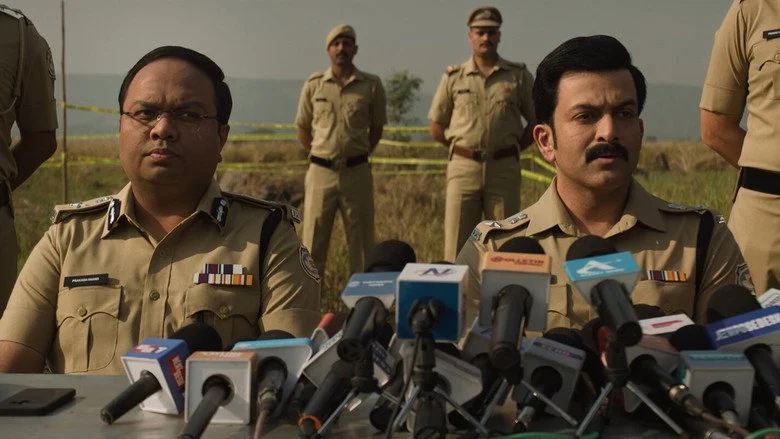
The opening of Daayra does not whisper. It roars with the sound of a crowd celebrating four bullet-riddled bodies. DCP Raman Kumar (Prithviraj Sukumaran) stands bathed in public adulation after his team guns down the men accused of raping and murdering a young woman named Ragini Pujari. The camera lingers on garlands, on folded hands, on the terrifying ease with which a nation mistakes slaughter for salvation. It is a hell of a cold open, visceral, morally queasy, and instantly establishing Meghna Gulzar’s intent to dissect the machinery of vigilante justice rather than merely depict it.
For roughly seventy minutes, that intent holds. Then the film, much like its own investigation, begins to lose the thread.
The Procedural Promise and Its Slow Unraveling
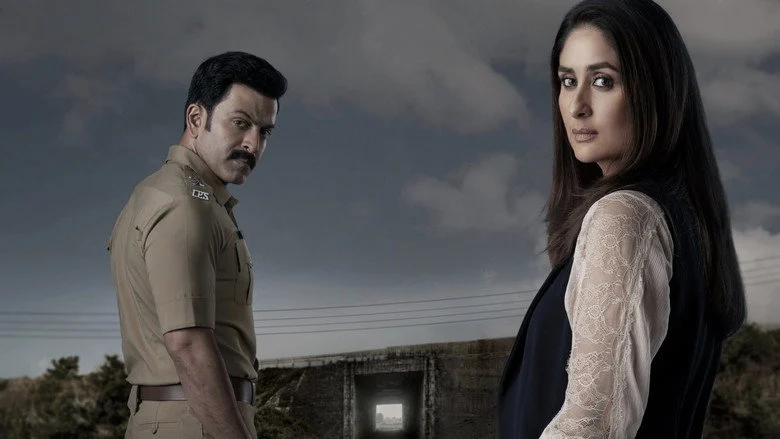
Gulzar, working from a screenplay co-written with Sima Agarwal and Yash Keswani, constructs Daayra as a non-linear police procedural. The present-day narrative follows DCP Ajooni Kohli (Kareena Kapoor Khan) of internal vigilance, tasked with determining whether Raman’s encounter was legitimate or staged. The past-tense thread reconstructs Ragini’s disappearance, the systemic failures that preceded her death, and the precise moment when Raman’s team decided that paperwork was too slow and bullets were faster.
The film’s strongest asset is its refusal to paint either officer as villain or savior. Raman is not a cartoonish brute; he is a man who genuinely believes he is protecting the vulnerable from a system that has already failed them. Ajooni is not a naive bureaucrat; she understands the rot from within, having spent years navigating it. Their ideological clashes, captured in a standout line from Ajooni: “System change hote hain Vishal, log nahi. Attitude kaise change karoge?”, carry the weight of a debate that India has been having, loudly and often violently, for decades.
But here is where the film stumbles. The cat-and-mouse tension that the investigation promises never quite materialises. Shweta Keshri of India Today noted this precise failure, and she is correct. The interrogation sequences, while competently staged, lack the coiled menace of a truly great procedural. We watch Ajooni ask questions. We watch Raman deflect. We watch the pieces slowly align. But we never feel the floor shifting beneath anyone’s feet.
Kshitee Jog and the Scene That Almost Saves Everything
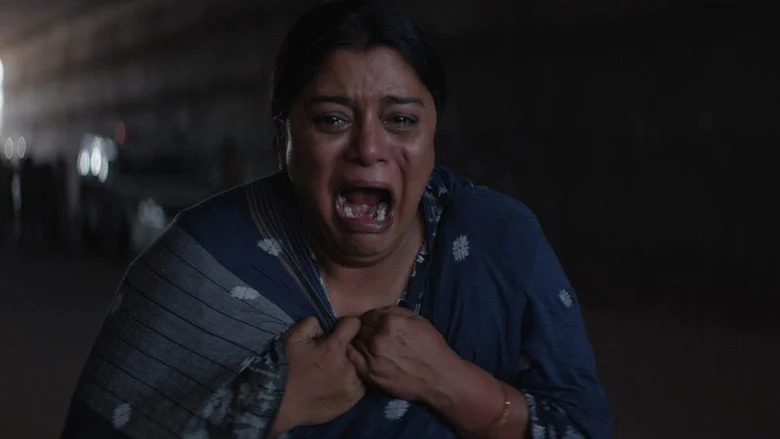
There is one sequence in Daayra that achieves the emotional and moral clarity the rest of the film grasps at. Kshitee Jog, playing Ragini’s mother Parvati Pujari, delivers a testimony about the aftermath of her daughter’s death. She does not wail. She does not beg. She recounts, in a voice stripped of all theatricality, the years of filing complaints, the doors slammed in her face, the casual indifference of a system that had already decided her daughter was not worth the paperwork.
The camera holds on her hands, work-worn, still, resting in her lap, while her words do the damage. It is a masterclass in restraint, and it exposes the film’s central thesis more effectively than any of the ideological debates between the leads. The system did not fail Ragini. The system was never designed to protect her in the first place. When Parvati finishes speaking, the silence in the room is not dramatic. It is simply true.
Renuka Vyavahare of The Times of India argued that the film needed to dig deeper into what happens when extrajudicial action undermines the very system of justice. That digging happens here, in this one scene, with this one performance. The tragedy is that the film does not build on it.
Prithviraj Sukumaran’s Intensity vs. Kareena Kapoor Khan’s Underdevelopment
Prithviraj Sukumaran is the film’s engine. His Raman Kumar is a study in controlled fury, the way he squares his shoulders during press interactions, the flicker of something unreadable in his eyes when the encounter is first questioned, the gradual erosion of his certainty as Ajooni’s investigation tightens around him. In the aftermath of the encounter, he does not celebrate. He watches. And in that watching, Prithviraj conveys the terrible knowledge that he has crossed a line he can never uncross, even if he believes the crossing was necessary.
Kareena Kapoor Khan, by contrast, is given less to work with. Ajooni Kohli is a fascinating character on paper, a woman in a position of institutional power, tasked with investigating her own colleagues, carrying the weight of being perpetually underestimated. But the screenplay never fully explores her interiority. We see her procedural rigor. We see her ideological commitment. We rarely see her doubt, her fear, her exhaustion. The film’s decision to prioritize Raman’s arc over Ajooni’s leaves a hole at its center. When the final confrontation arrives, it lands with less force than it should because we have not spent enough time inside Ajooni’s head to understand what this case has cost her.
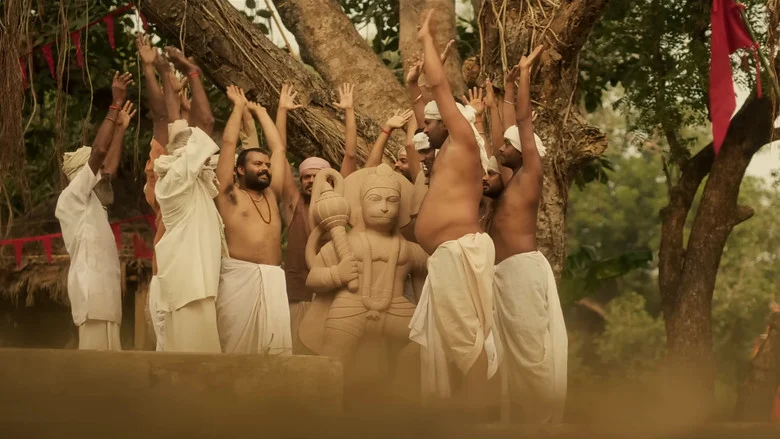
For a more successful recent example of a film that balances procedural mechanics with genuine emotional stakes, our review of Hanuman Ansh verdict examines how devotion, to a cause, to a person, to an ideal, can either anchor or overwhelm a narrative. Daayra could have learned from that balance.
The Second Half Problem: When Tension Becomes Tedium
The most consistent criticism leveled at Daayra concerns its second half, and it is a fair one. The first seventy minutes build mystery effectively, cutting between past and present with a rhythm that feels purposeful. The use of CCTV footage and rear-view mirror shots to draw visual parallels between the original crime and the subsequent cover-up is genuinely inspired, a reminder that Gulzar, whatever the screenplay’s flaws, remains a director of considerable formal intelligence.
But once the investigation reaches its midpoint, the film begins to stretch. Scenes that should crackle with tension instead meander. The editing, so sharp in the first act, loses its precision. The background score by Ketan Sodha, restrained and effective early on, begins to feel like it is compensating for a lack of dramatic momentum rather than enhancing it. By the time the final confrontation between Ajooni and Raman arrives, the film has spent so much time circling its central argument that the argument itself has lost its urgency.
This is not a failure of ambition. It is a failure of structure. The non-linear approach, which works so well in the first half, becomes a liability in the second. We have already learned what happened. The question now is why it matters. And the film, frustratingly, does not have a satisfying answer.
What the Film Gets Right, and What It Refuses to See
Daayra deserves credit for its realism. The police procedures feel authentic. The media trials are rendered with appropriate cynicism. The moral ambiguity is genuine, not performative. In a landscape where crime thrillers often reduce complex social issues to simple heroes and villains, Gulzar’s refusal to provide easy answers is admirable.
But there is a difference between refusing easy answers and refusing answers altogether. The film’s climax does not fully resolve its central argument. Some reviews have noted that it stops short of deeper systemic critique. This is accurate. The film gestures toward the rot within the institution, the way encounters are celebrated, the way dissent is silenced, the way the machinery protects its own, but it never quite names it. It is too polite, too restrained, too afraid of alienating the very audience it wants to provoke.
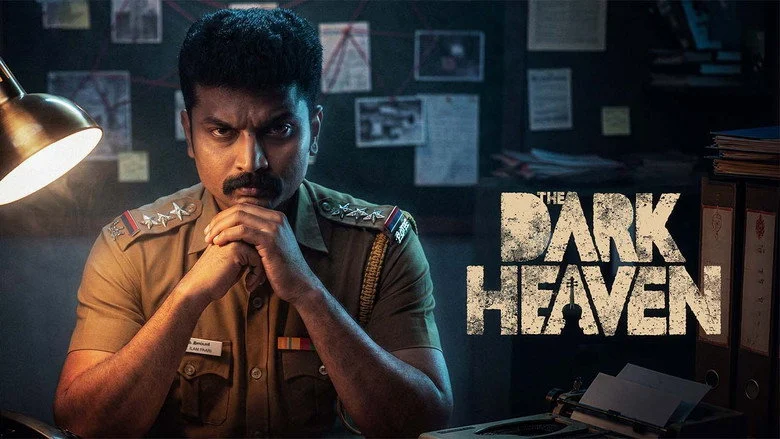
For a more successful example of a film that commits fully to its critique of systemic failure, our coverage of Dark Heaven review explores how a narrative can maintain its thematic coherence even when its plot mechanics falter. Daayra has the opposite problem: its plot is coherent, but its themes remain frustratingly unresolved.
The Supporting Cast: Brief but Effective
Jitendra Joshi, as Raman’s colleague, provides grounded support in the team sequences, his presence lending weight to the procedural elements. Kanwaljit Singh, as Ajooni’s father, appears in only a handful of scenes but brings quiet authority to each one, a reminder of the generational weight that Ajooni carries. Biswapati Sarkar as Police Commissioner Anand and Seema Azmi as SP Indira Pandey are similarly effective in limited screen time, though one wishes the screenplay had given them more to do.
The film’s true supporting standout, however, remains Kshitee Jog. Her Parvati is the emotional conscience of the film, and her testimony scene is the closest Daayra comes to achieving the moral clarity it seeks.
Final Verdict: A Film at War With Itself
Daayra is a frustrating experience, not because it is bad, but because it could have been so much better. Gulzar’s direction is assured, the performances are strong, and the film’s commitment to moral ambiguity is commendable. But the screenplay’s structural weaknesses, particularly in the second half, prevent the film from achieving the impact its premise demands. The cat-and-mouse tension never materializes. The ideological debate never fully lands. And the character at the film’s center remains, frustratingly, a mystery.
Who should watch it: Class audiences interested in crime dramas and social issues; fans of Meghna Gulzar’s previous works like Talvar and Raazi; viewers who appreciate realistic police procedurals and moral ambiguity.
Who should skip it: Viewers seeking fast-paced action thrillers or family entertainment; those who prefer their crime dramas with clearer resolutions and more propulsive pacing.
Best format: Regular theatrical. The investigative tension, such as it is, benefits from the focused attention of a cinema screen.
Star rating: 2.5/5, A compelling premise and strong performances undermined by a screenplay that loses its way in the second half. Worth watching for Kshitee Jog’s performance and Prithviraj Sukumaran’s intensity, but ultimately a missed opportunity.